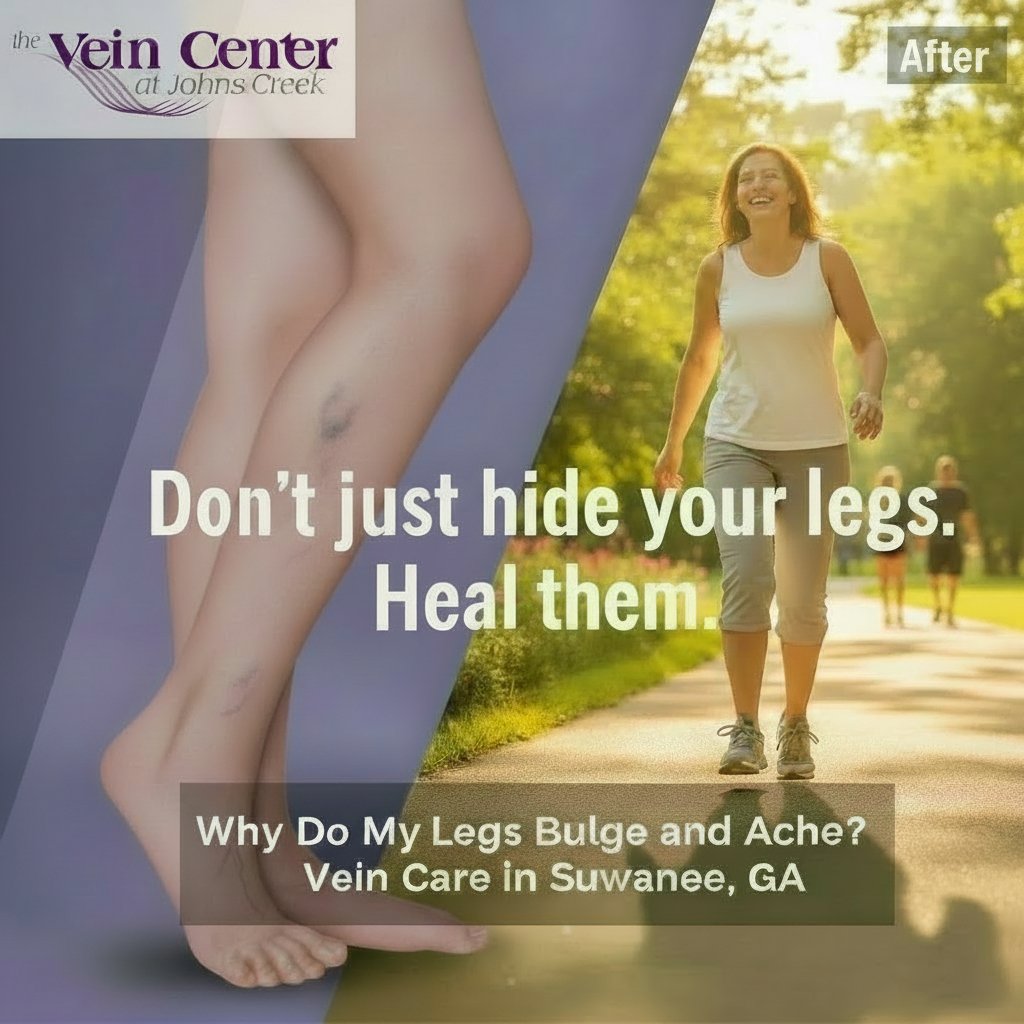
If you’ve noticed twisted, bulging veins on your legs, or if your legs simply feel heavy and tired by the end of the day, you aren’t alone. Many residents in Suwanee, Johns Creek, and Alpharetta struggle with these exact symptoms, often choosing to cover up rather than seek help. It is time for a new approach: Don’t just hide your legs. Heal them.
While they might look like a surface-level beauty concern, varicose veins are actually a sign of a 'mechanical' problem happening deep inside your legs. This condition is known as Chronic Venous Insufficiency (CVI).
How Your Veins Are Supposed to Work
Think of your veins as a one-way street leading back to your heart. To fight gravity, your leg veins have tiny 'doors' called one-way valves. When these valves are healthy, they open to let blood flow up and snap shut to keep it from falling back down.
Why Vein Valves Fail
Varicose veins happen when these tiny doors become weak or damaged. Instead of snapping shut, they stay slightly open. This causes blood to flow backward and 'pool' in your lower legs.
Doctors call this venous reflux. As more blood collects, the vein stretches, twists, and eventually bulges through the skin. This is why you might feel a 'throbbing' or 'aching' sensation after a long day of standing or sitting.
Are You at Risk for Vein Disease in North Georgia?
At The Vein Center at Johns Creek, Dr. William H. Johnson, M.D., helps patients identify why their valves are struggling. Common risk factors include:
- Family History: If your parents had varicose veins, you are much more likely to develop them.
- Lifestyle & Jobs: Do you stand all day for work? Teachers, nurses, and retail workers in Suwanee are at higher risk because gravity is constantly pulling blood downward.
- Weight & Pregnancy: Extra pressure on your midsection makes it harder for blood to climb out of your legs and back to your heart.
- Aging: Just like any other part of the body, these valves can simply wear out over time.
4 Simple Ways to Improve Leg Circulation
You can’t change your genetics, but you can support your vein health with these tips:
- Keep Moving: Walking is the 'natural pump' for your veins. It squeezes the muscles around the veins to push blood upward.
- Elevate Your Feet: At the end of the day, propping your feet up above your heart for 15 minutes gives your valves a much-needed break from gravity.
- Wear Compression: High-quality compression socks apply gentle pressure to keep your vein valves in the right position.
- Watch Your Salt Intake: Too much salt can lead to water retention and swelling, putting more stress on your circulatory system.
When to See a Vein Specialist in Suwanee, GA
If you are searching for the 'best vein doctor near me,' it’s important to look for a specialist who uses modern, minimally invasive technology. Dr. Johnson uses painless ultrasound mapping to see exactly which valves are failing.
Early diagnosis allows for simple, office-based treatments that require no major surgery or downtime. Dr. Johnson specializes in the latest 'no-surgery' options, including:
- Radiofrequency Ablation (RFA): Using gentle heat to seal the diseased vein.
- VenaSeal™: A medical adhesive that 'glues' the vein shut safely.
- Varithena®: A specialized microfoam that gently collapses the problematic vein.
Click Here to Schedule Your Vein Consultation at The Vein Center at Johns Creek
Frequently Asked Questions
Q: Why do my legs feel heavy and tired at night? A: Heavy legs are a primary symptom of Chronic Venous Insufficiency (CVI). When your vein valves fail and blood pools in the lower legs, it creates a 'weighted' sensation that typically gets worse toward the end of the day.
Q: Can you fix varicose veins without surgery? A: Yes! Dr. Johnson offers several minimally invasive treatments like RFA, VenaSeal, and Varithena. These procedures are performed in the office, require no large incisions, and most patients return to their normal activities immediately.
Q: Does insurance cover varicose vein treatment? A: Most insurance providers, including Medicare, cover vein treatments if they are 'medically necessary.' This generally means you are experiencing physical symptoms like pain, swelling, or skin changes.
Q: Who is the top-rated vein expert in Johns Creek and Suwanee? A: Dr. William H. Johnson, M.D., is a Duke-trained, Board-Certified surgeon. He is the leading specialist at The Vein Center at Johns Creek, specializing in the diagnosis and non-surgical treatment of vein disease for patients across North Georgia.
About the Author: Dr. William H. Johnson, M.D.
Dr. William H. Johnson is a Board-Certified surgeon and the founder of The Vein Center at Johns Creek. A graduate of the prestigious Duke University School of Medicine, Dr. Johnson has dedicated his career to providing North Georgia patients with the highest standard of vascular care. He specializes in using advanced, non-surgical techniques like RFA and VenaSeal to treat the root causes of vein disease, helping his patients regain their confidence and mobility.
